





Aug
Two-light wall lamp: a practical choice that decorates the wall
Two-light wall lamps are a simple yet often very effective solution. They provide more light than a single-light model and, at the same time, help fill a wall that might otherwise look empty.
They can be classic, modern, in crystal, glass, metal, or ceramic. For this reason, there isn’t just one way to use them: they can complete the living room, illuminate a hallway, or replace bedside lamps.
The important thing is to choose a model suitable for the environment, without looking only at the style.
Where they look best
Two-light wall lamps adapt well to various rooms in the home.
In the living room, they can be placed on either side of a mirror, a painting, or a significant piece of furniture. In the dining room, they help illuminate the walls and make the room less dependent on the chandelier light alone.
They are also widely used in entryways, hallways, and along stairs, especially when spaces are large and a small wall light might go unnoticed.
In the bedroom they can replace classic bedside lamps, but in this case, it is better to choose a model that does not project too far and provides a pleasant light that is not bothersome during the evening.
Classic two-light wall lamps
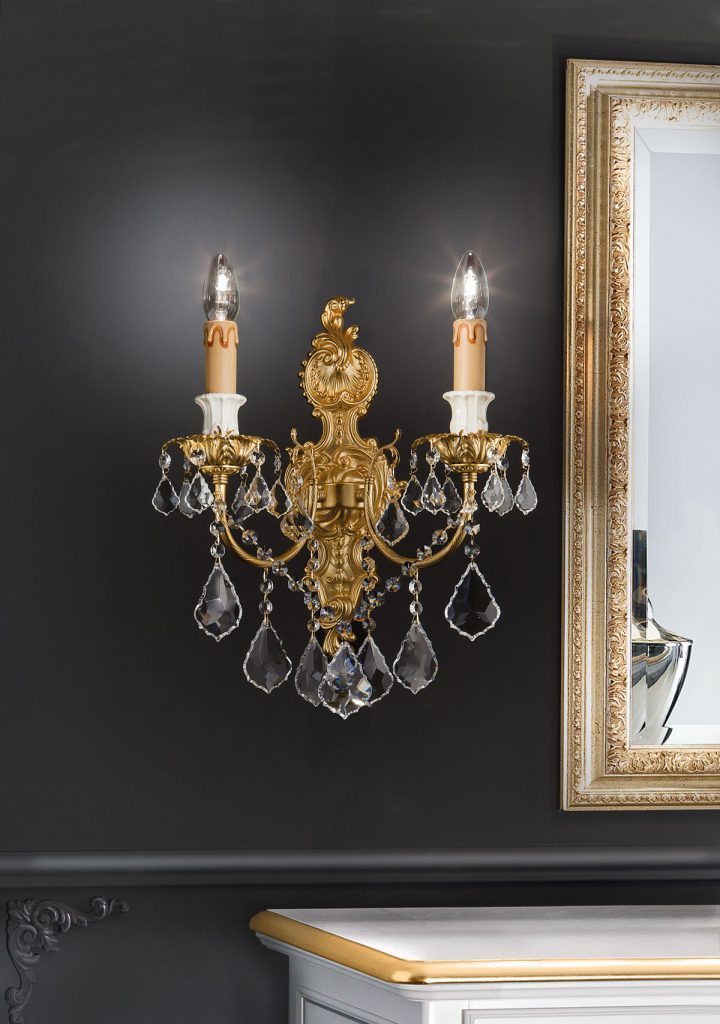
Classic models often resemble old wall candelabras. They feature curved arms, candle-shaped bulb holders, and finishes in gold, bronze, brass, or ivory.
They can be simple or enriched with crystal drops, octagons, and pendants. They are particularly suitable for traditional living rooms, bedrooms with wooden furniture, entryways with boiserie, and environments furnished in a classic-modern style.
However, it is not necessary to pair them with an entirely classic home. A crystal wall lamp can create a beautiful contrast even on a gray wall or next to furniture with more essential lines.
The important thing is not to overload the room with too many decorative elements
Modern versions
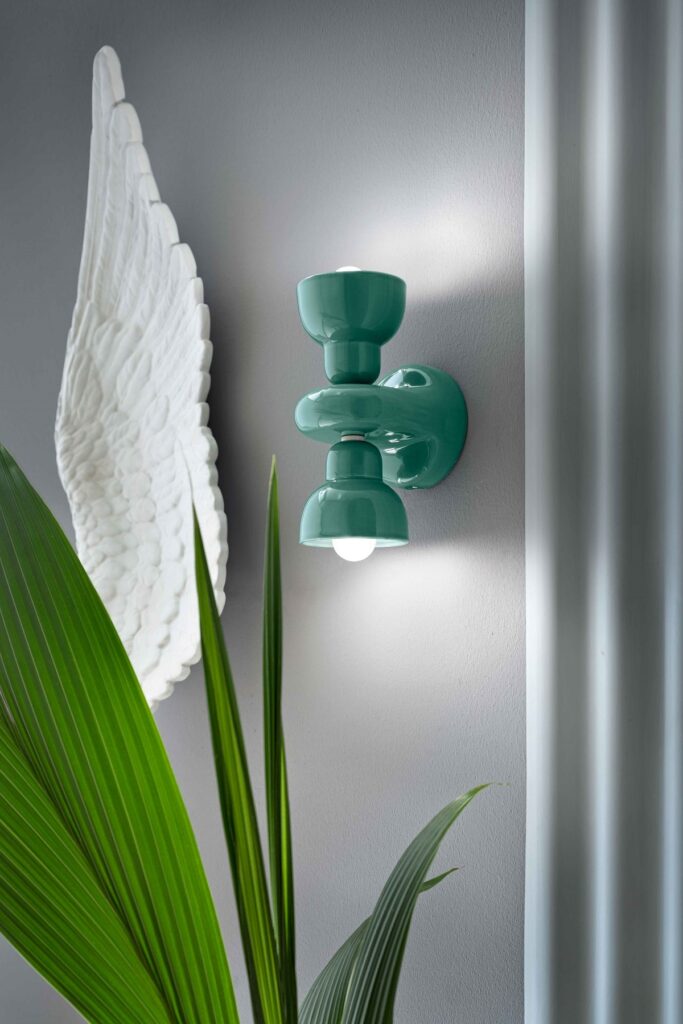
In modern wall lamps, the two lights can be arranged horizontally, vertically, or in opposite directions.
The structures are generally simpler and are made of metal, glass, ceramic, or technical materials. The most common finishes are black, white, satin brass, and chrome.
These models fit easily into contemporary living rooms, minimal bedrooms, and modern hallways. Some wall lamps have a very discreet shape and almost disappear on the wall; others, instead, become true decorative elements.
Pay attention to dimensions
One of the things to check before purchasing is the projection of the wall lamp. A lamp may look small from the front but be quite deep.
This aspect is especially important in hallways, near doors, or along stairs.
The width must also be proportionate to the wall. In a large living room, a wall lamp that is too small risks getting lost. In a cozy room, however, a very ornate model can be excessive.
When mounting two wall lamps on either side of a mirror or a piece of furniture, it is best to position them at the same height and maintain a consistent distance.
Rustic and vintage wall lamps
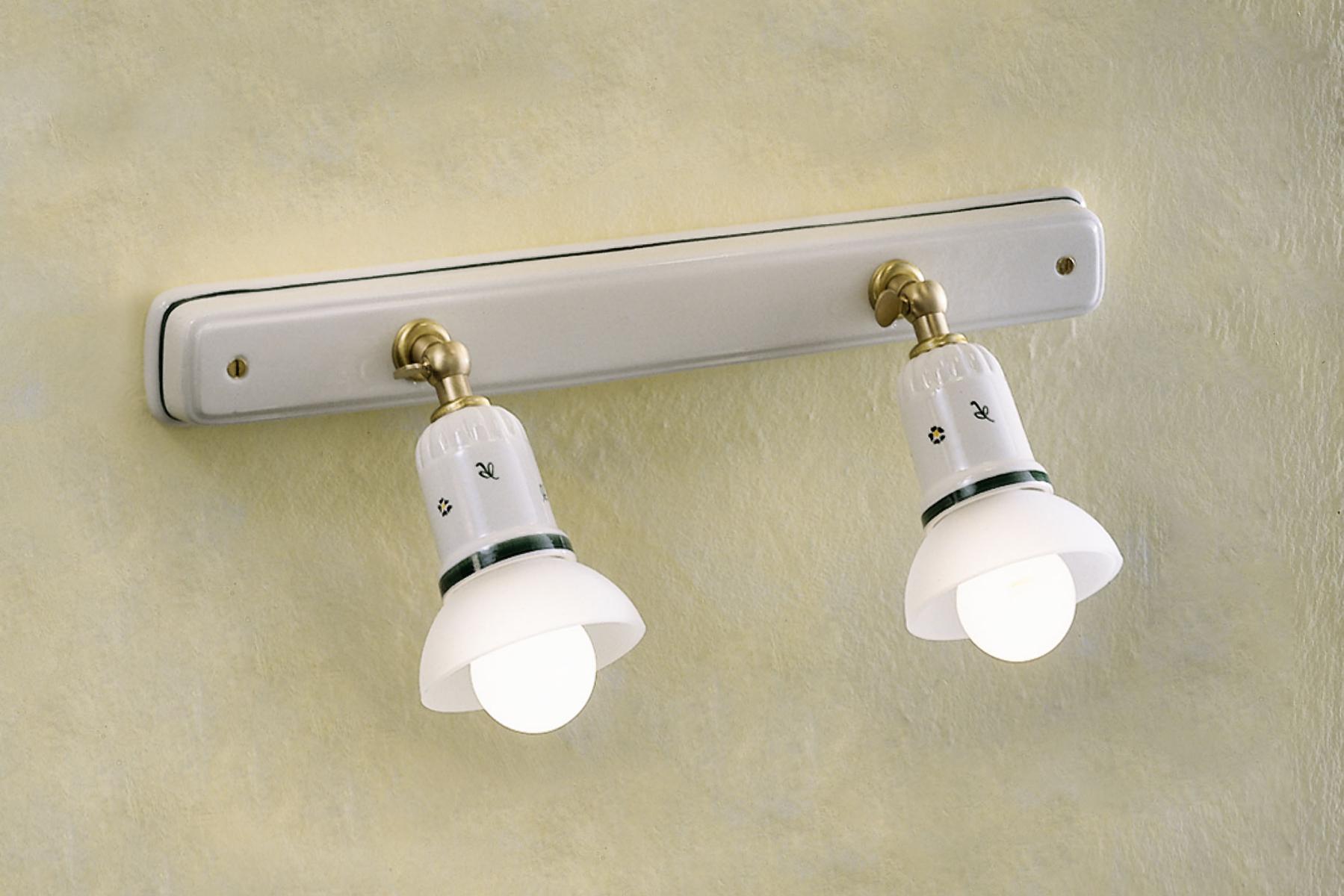
For a rustic home, a tavern, or an environment with a vintage style, you can choose wall lamps in ceramic, burnished metal, or iron.
Models with adjustable spotlights are practical because they allow you to direct the two lights separately. They can be used in the kitchen, in a reading corner, or on a wall with shelves and small objects.
Decorated or colored ceramic adds a more personal touch and pairs well with wood, stone, and warm-toned walls.
How to choose the size
Before purchasing, it is advisable to check not only the width of the wall lamp but also its projection from the wall.
In a narrow hallway or near a door, it is better to avoid models that are too deep. In a large room, on the contrary, a very small wall lamp might look out of proportion.
The installation height must also be considered. Generally, wall lamps are placed above eye level, but the position can change based on the environment, the shape of the model, and the direction of the light.
If they are mounted in pairs, it is important to maintain the same height and a balanced distance relative to the central element, such as a painting, a mirror, or a console table.
Light temperature
The choice of bulb also changes the final result.
A warm light, around 2700 or 3000 K, is suitable for the living room, dining room, and bedroom. It makes the environment more welcoming and enhances gold, bronze, and brass finishes.
A more neutral light can be useful in hallways, entryways, or modern environments, but it should always be chosen taking into account the other lamps present in the room.
When the wall lamp, chandelier, and table lamps are in the same room, it is preferable to use the same light tone.
A practical solution for decorating as well
The two-light wall lamp is not just for increasing brightness. It can give rhythm to a wall, highlight a piece of furniture, and create a more pleasant atmosphere in the evening hours.
Whether classic, modern, or rustic, it should be chosen by observing the space as a whole. Dimensions, finish, light direction, and style must be consistent with the rest of the room.
When these elements are well-balanced, even a simple wall lamp can change the look of the room.
